Thursday, March 17, 2016

Keeping The Tradition Alive: The Thrust Of Jewish Education

Image source: Yavneh.vic.edu.au.com
Exposure to culture and traditions is important, especially in a child’s formative years. In a world marked by diversity, it is primarily the parents’ responsibility to inform their children about their heritage. In the Jewish tradition, history and people’s respective roles in the community are of high importance. Jewish day schools also uphold these while placing value on general secular education.

Schools serve as parents’ partners in raising children. During the formative years, children construct their worldviews and develop their socialization skills based on the examples of adults. Self-esteem and talents are also developed at this stage. In Jewish day schools, the study of the Torah, Tanakh, and Hebrew is an integral part of the curriculum, on top of the required general education subjects. As in other religious schools, the practice of one’s faith is encouraged and modeled by the teachers.

Image source: Coag.gov.au
The aim of Jewish education is excellence. This can only be achieved if the student has a firm grasp of his or her roots as a human being. Growing up Jewish means being a part of a rich history that has produced people who changed their generation. Above all, knowledge of the scripture opens up a student to invaluable wisdom that will shape decision-making.

Ronald Safdieh is the president of Dameron Fine Art in Lakewood, New Jersey, an all-boys school that offers academic programs in line with Jewish traditions. To know more about him, subscribe to this blog.

Tuesday, December 15, 2015

Jewish Clothing As Prescribed By the Torah

From a general and a ritual perspective, Jewish clothing is highly influenced by the Torah. Modesty is an important part of the Jewish culture, and it applies to both men and women. As modern fashion emerged, Jews have generally worn current style, as long as the clothes were not too tight-fitting, revealing, and brightly colored.

https://upload.wikimedia.org/wikipedia/commons/thumb/d/d5/Jacob_and_Rebekah.jpg/524px-Jacob_and_Rebekah.jpg
Image source: roseannawhite.com

One’s clothing is a reflection of his religious standing, social status, and relationship to the outside world. The Torah teaches that Jews should not wear garments that consist of wool and linen (Leviticus 19:9). In Numbers 15, the Jews were commanded to put on fringes on the corners of their garment, so they will always be reminded to observe the mitzvot. Men were prohibited from wearing women’s clothing, and vice versa. Jewish clothing also gave a distinction between the Israelites and the Egyptians—and this was an identification that a person (a Jew) was to be rescued from the hands of the Egyptian pharaoh.

A detailed wear for the high priest was given in Exodus 28 and was later adopted for the temple in Jerusalem. The high priest’s garment is full of symbolisms for the Yom Kippur. The clothing is mostly in white—which symbolizes purity and humility.

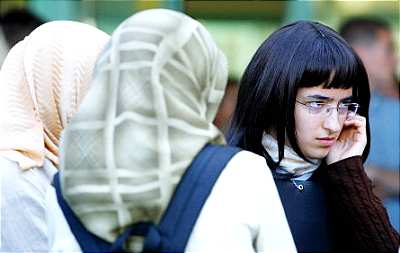
For women, an uncovered head was considered immodest—especially when she is already married.

Jewish people in the modern society still value what is prescribed by the Torah. There may have been variations in culture, but one thing remains—modesty in clothing is still a practice that will never be forgotten, even after many generations.

http://www.bestjewishstudies.com/sites/all/images/modesty/1438083658820.png
Image source: bestjewishstudies.com

Dameron Fine Art is an all-boys K-8 school in Lakewood, New Jersey, headed by Ronald Safdieh. Gain a deeper understanding of Sephardic values and traditions when you visit this blog.

Thursday, December 10, 2015

Preserving the Cultural Heritage of the Sephardic Community

The legacy of the Spanish and the Arabs also left an indelible mark on the Sephardic self-perception. Sephardic Jewish identity had been shaped by the often privileged positions they occupied in Islamic Spain. Prior to the expulsion, the Jewry of Iberia were scholarly in nature, leading to a greater tolerance of humanistic ideals and intercultural exchanges. This legacy is preserved today in the more receptive and brotherly perspectives held by Sephardim toward related cultures and the close ties that bind the Sephardic communities to their identity today.

Today, Jewish culture is widely represented throughout the world through the culture and mores of the Ashkenazim, whose cultural milieu predominates both in Israel and in many countries with significant Jewish populations. Sephardic and Mizrahi Jewish communities, meanwhile, are largely restricted to the Middle East and North Africa, with few minority populations elsewhere.

Up until relatively recently, the Sephardic communities have experienced a sharp cultural decline, which has only recently been overturned. There are a few cases of Jewish people rediscovering their Sephardic roots.

Sephardic Jewish scholars, therefore, underscore the need to promote and preserve the hallmarks of Sephardic culture, in particular its language, Ladino, as a vital aspect of Jewish history and heritage. A largely forgotten language with few speakers even among the Sephardim, today, Ladino is experiencing a minor revival among ethnic Sephardim.

Much needs to be done to preserve many of the cultural hallmarks of the Sephardim. Advocates like Ronald Safdieh and Dameron Fine Art are dedicated to keeping the rich heritage of Sephardic Jewish culture alive in the next generation. Visit this blog for more updates.

Tuesday, September 29, 2015

Practicing Tzedakah: The Importance of Philanthropy in the Jewish Community

In the Tanakh, the term “tzedakah” means “righteous behavior,” but for most Jews today the term has become synonymous to charitable giving. 

Giving to those in need is tackled in the Torah. The Torah says that “…there will never cease to be needy ones in your land, which is why I command you: open your hand to the poor and needy kinsman in your land” (Deuteronomy 15:11). The Torah reminds people that they have an obligation to help the people around them.

          Image source: Deepdotweb.com
“And when you reap the harvest of your land, you shall not reap to the very corners of your field, nor shall you gather the gleanings of your harvest. And you shall not glean your vineyard, nor shall you gather every grape of your vineyard; you shall leave them for the poor and stranger; I am the Lord your God.”—Leviticus 19:9-10
For example, in the passage above, the Torah instructs farmers to allot a part of their harvested goods to feed others. This is a tradition that is still evident in today’s Jewish communities. 

Aside from allocating a percentage of their earnings for the poor, Jewish communities have started voluntary societies to care for the sick, assist newlywed couples, bury the dead, and offer interest-free loans to the disadvantaged. For modern Jewish groups, the act of giving became a part of their lifestyle as well as a distinguishing feature of the whole Jewish population.

              Image source: BlissTree.com

 Ronald Safdieh is the president of Dameron Fine Art, a Jewish K-8 school for boys in Lakewood, New Jersey. He and the school aim to help the youth understand the concepts behind the Jewish life. Visit this Facebook page for more information about Jewish education.

Tuesday, August 25, 2015

Abraham tested: The Binding of Isaac and its Significance to Judaism

According to Jewish tradition, Abraham is the first patriarch of the Jewish people and the founding father of the covenant, or b'rit, between God and the House of Israel. The binding of Isaac is the last, and the hardest, of the 10 trials that God gave Abraham.

https://upload.wikimedia.org/wikipedia/commons/6/60/Sacrifice_of_Isaac-Caravaggio_(Uffizi).jpg
Image source: wikipedia.org
The story of Abraham

Despite being the son of a man who made idols, Abram, from an early age, believed that there was only one true God. When he was 99 years old, God told Abram to leave Ur, where he was born, and to move to Canaan. In return, God promised Abram that he would become the father of a great nation.

To get to Canaan, Abram traveled through an area that is now called Israel. God promised that the land would be his and his descendants'. However, Abram was far too old to have children: At this time, he was almost 100 years old, and his wife Sarai was 90. God performed a miracle for Abram: Sarai soon became pregnant with a son, whom they named Isaac. God changed Abram's name to Abraham, which means, “father of many.”

By allowing Sarai and Abraham to have a child, God showed that He had the power to control even natural processes and that He kept his promises.

The akedah

To test Abraham's faith, God commanded him to offer Isaac as a burnt offering. It was also a test of faith for Isaac, who knew he was about to be sacrificed but did not resist.

Abraham, although distraught, obeyed. He had already bound Isaac at an altar in Moriah when he was stopped at the last moment by an angel. Abraham found a ram nearby and sacrificed it instead. God then reiterated his promise: "I will greatly multiply your seed as the stars of the heavens and as the sand that is on the seashore, and your descendants will inherit the cities of their enemies."

http://i.huffpost.com/gadgets/slideshows/248465/slide_248465_1471025_free.jpg
Image source: huffingtonpost.com


The word “akedah” refers to the binding of Isaac at the altar and is a word that cannot be found elsewhere in the Bible apart from Genesis 22. It became, in Jewish tradition, the supreme example of obedience to God's will and Isaac's devotion and willingness became a symbol of Jewish martyrdom and the willingness of the Jewish people to give up their lives for Kiddush HaShem, or the sanctification of God's name.

Ronald Safdieh is the head of Dameron Fine Arts. For more articles on the Jewish faith, subscribe to this blog.

Tuesday, July 14, 2015

Ladino: The linguistic Heritage Of the Sephardim

Although not as prominent in popular consciousness due to a lower number of native speakers, Ladino remains one of the most important cultural markers of Jewish culture. It is the common language spoken by the Sephardic Jews who trace their ancestry to the Iberian nations of Spain and Portugal.

 Image source: tabletmag.com

A spoken and written language sometimes called Judeo-Spanish, Ladino became exclusively tied to the Iberian Jews following their expulsion from Spain in 1492. The language is tied to the Sephardim as Yiddish is to the Ashkenazim, having united the people in cultural solidarity for much of the Middle Ages.

Ladino is a Romance language, heavily derived from Medieval Spanish and Hebrew, with many linguistic influences from Aragonese, Astur-Leonese, Catalan, Galician-Portuguese, and Mozarabic. Due to the settlement of Sephardic communities across the Mediterranean, the Ladino vocabulary has words derived from other prominent languages in the region such as Ottoman Turkish, French, Italian, Greek, and Serbo-Croat.

 Image source: Amazon.com

Historically, Ladino has been written in Hebrew script, usually in Rashi or Solitreo, although it is today sometimes written mainly in Roman letters as Spanish is. It has a formalized literary dialect and several colloquial ones that sprang up throughout the diaspora.

In spite of its cultural ties with the Sephardic community, the language itself is largely forgotten. The speakers of Ladino number a few hundred in the United States and about 100,000 in Israel itself. Movements have emerged to protect Ladino from linguistic extinction via being subsumed into Spanish. A linguistic revival spearheaded by several Sephardic communities has also taken root to keep the language alive.

Ronald Safdieh heads Dameron Fine Art. Follow this Twitter account for more updates on Sephardic Jewish issues.

Thursday, June 11, 2015

Center of Judaic Faith: An Introductory Insight Into The Concept of ‘Torah’

For the Jewish community, the Torah is more than just a book of “instructions.”  Those who religiously follow it develop their own way of life around it.  As the central dogma of the Judaic faith, the Torah and the level of comprehension one has about its teachings are crucial to achieving spiritual bliss.

The Torah is the Hebrew name for the first five books of the Bible: Genesis, Exodus, Leviticus, Numbers, and Deuteronomy.  Its contents, while almost the same in all publications, offers several interpretations and insights on each reading, creating a myriad of meanings for each verse, chapter, or the entire book.


Image source: torahinmyheart.com

The rabbinic tradition reveals that all of the teachings found in the Torah, both written and oral, came from God and spread through Moses, the prophet.  The literature was believed to have been introduced at Mount Sinai and at the Tabernacle.  Moses wrote down all the teachings and compiled them all to form the Torah.  According to a Midrash, meanwhile, some of the contents of the book were believed to have been the basis of Creation.

While the Torah is extensively studied by every member of the Jewish community as an academic subject, most of them have turned to it as their daily provider of wisdom, strength, and spiritual vigor—in and out of the classroom.


Image sourcejewsdownunder.com

 Ronald Safdieh is the president of Dameron Fine Art.  Find him on Facebook.